lunes 19 de octubre - 2026
Región Sur Occidente
 Danna is 9 years old and lives in Pereira. She is currently in second grade, having had to change schools several times. Determined to move on to third grade, she is studying hard to master her multiplication tables. Mathematics and art are her favorite subjects, and she dreams of learning English because she wants to speak several languages.
But amid her dreams, her efforts to learn, and the joy she finds in playing and doing the things she loves, Danna experienced something that changed her life. One day, the ground began to move, bringing fear, uncertainty, and a deep sense of compassion for others.
On August 10, a 7.4-magnitude earthquake, with its epicenter in the department of Chocó, shook Pereira.
Danna was at school when she first felt the table moving. At first, she thought one of her classmates was shaking it. But as the movement became stronger, she realized it was an earthquake. Everyone ran out of the classroom while the teacher told them, “Get down and cover your head.”
“It was really scary because everything was moving like that,” Danna says, moving her hands to recreate the intensity of the shaking she felt that day.
She remembers seeing parents trying to climb over the school fence to reach their children. When they finally found each other, she saw them embrace.
At first, Danna thought her mother was not going to come. Then she saw her sister standing with her mother. Relief washed over her. They were together, and they were safe.
Amid the chaos and uncertainty, Danna and her family went to her grandmother’s house to make sure she was okay. Thankfully, her grandmother and the rest of the family were unharmed. But as they moved through the city, the emotional impact of the earthquake began to sink in.
Places that had been standing only hours before were now damaged or destroyed. Danna was shocked every time she saw rubble, broken glass, and collapsed houses. She remembers a four-story building that had collapsed in her grandmother’s neighborhood, with a shop on the first floor.
Seeing those familiar places transformed by the earthquake was difficult to understand.
“I said, ‘No, this is like the end of the world,’” Danna recalls.
As the hours passed, Danna and her mother continued visiting relatives. Each visit brought a little relief when they found their loved ones safe. But the experience also made Danna increasingly aware of how vulnerable others were.
When they arrived at her aunt’s house, where a one-year-old baby lived, Danna picked up the baby and held her close. Amid everything that was happening, she noticed how fragile she was. The baby could not understand what was happening or why everyone was afraid.
So Danna hugged her.
In the middle of the chaos, that embrace became a small moment of safety.
And hugs became a refuge for Danna, too. Whenever she met someone close to her, she embraced them, sharing the fear and uncertainty they were all carrying. She remembers hugging a little friend while they both cried, still frightened by what had happened.
As she witnessed the scale of the emergency and visited relatives to make sure they were safe, Danna was not only becoming more aware of her own fear. She was also becoming more compassionate toward those who had lost their belongings and homes.
“We went to an aunt’s house because we thought everything had collapsed, but thank God she was okay.”
But when they arrived at the home of her mother’s cousin, Harold, they found a different reality.
Danna remembers him as someone vulnerable, without the comfort of his home around him.
“I felt so sorry for him because his house collapsed, and he was the one throwing things away... What a shame,” she says.
Her compassion is evident in her words and gestures, and in the way she remembers those moments. Even though her family was safe, the fear remained.
“Thank God everyone was okay, but I feel very nervous,” Danna says.
“I was really scared. Do you know what I felt?” she asks, placing a hand over her chest as she remembers the anguish she still carries.
But Danna and her family also had to face their own reality when they returned home. Their house was no longer safe.
“A crack appeared in my house. I thought that if the crack reached all the way to the floor, the houses would collapse.”
From that moment on, Danna could no longer return home. She and her family moved into temporary accommodation, where they faced a different kind of uncertainty.
The lack of privacy and having to share the same space with hundreds of people made Danna uncomfortable. The hours seemed endless, and all she wanted was to go home.
Eventually, Danna and her family left the temporary accommodation* and moved to an informal human settlement* alongside other families. A community leader offered them a piece of land where they could stay while the authorities assessed what could be done about their home, knowing that they could not remain in the temporary accommodation indefinitely.
For Danna, the move brought a sense of relief.
She says that if another earthquake happens, they can get outside more quickly because they can simply run out.
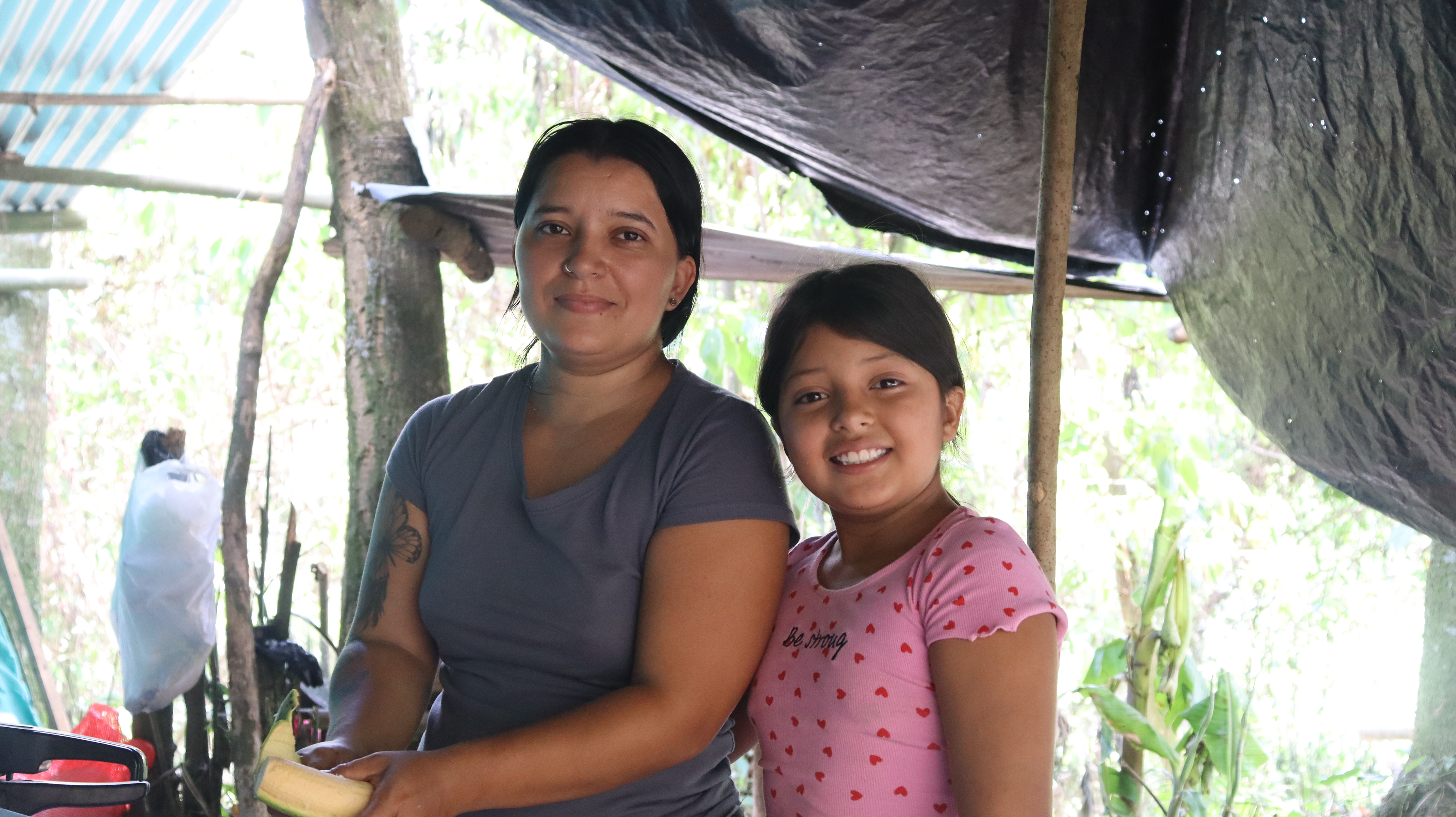
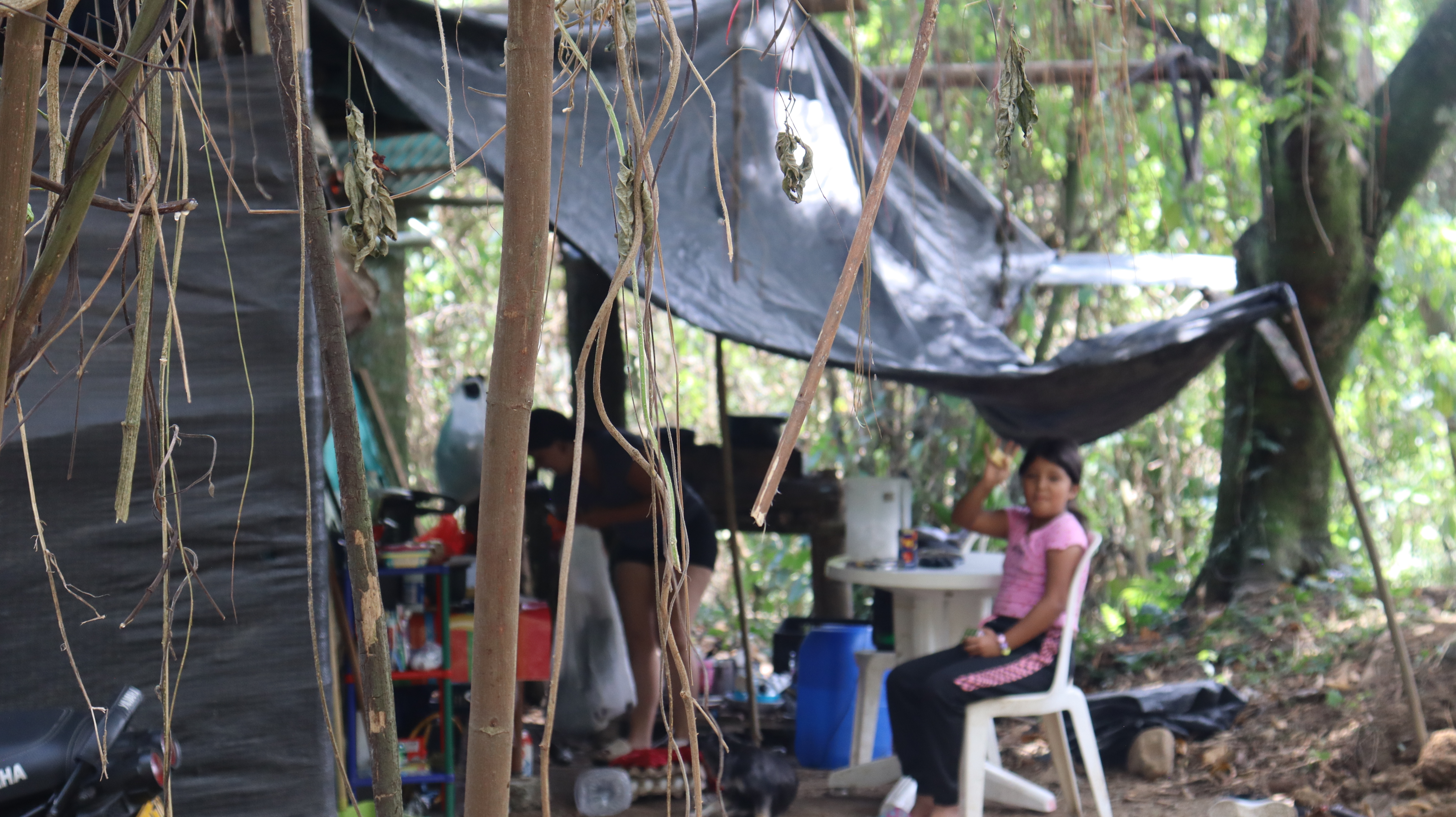
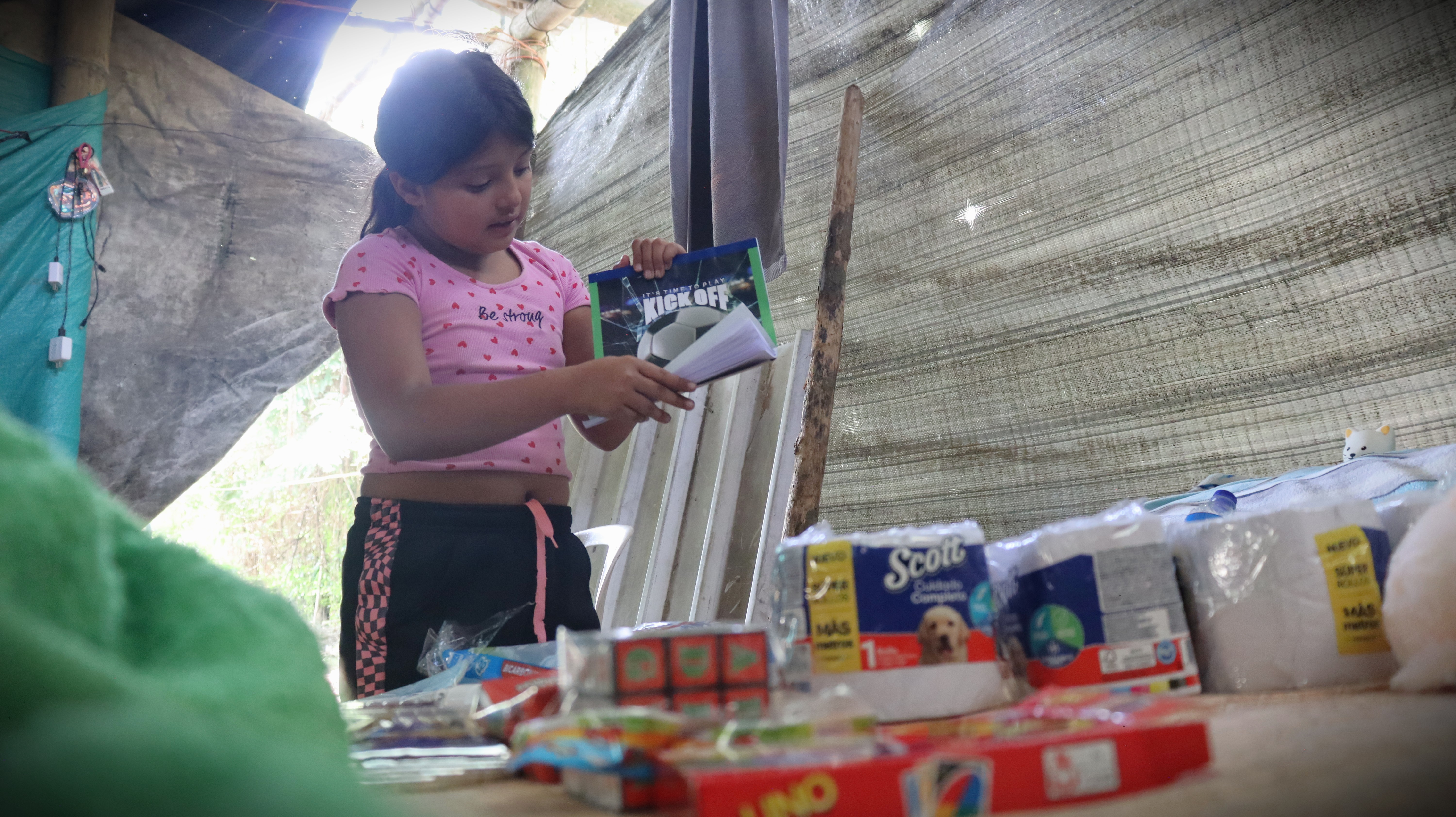
Their new home is supported by bamboo poles, with tents on both sides that provide some privacy. Metal sheets serve as a roof, protecting the family from the rain and from the sunlight filtering through the branches of the large trees around them.
There is no conventional bed frame. Instead, a mattress rests on crates that her father brings home from his work transporting fruit.
Despite everything, Danna says she likes sleeping there and is grateful for what they have.
Yet the days that followed were still marked by fear. The sadness of seeing her city in chaos was compounded by the uncertainty that something could happen again.
Rumors about possible aftershocks and conversations about the possibility of the Puracé volcano erupting added to the anxiety. Although Danna lives far from the volcano in Pereira, she heard the adults around her speaking about it with fear. She worried not only about herself, but also about the people who could be affected.
Danna is still not completely at ease.
She says she struggles to sleep at night and looks for ways to be prepared in case the ground shakes again or another emergency occurs.
“I’m not going to feel calm. With the donations, I keep emergency kits with things like toilet paper, clothes, food and water, things like that, in case this happens again.”
The fear remains, intertwined with the stories of families and friends who lost their homes—stories that Danna witnessed up close.
“It is very sad to feel that,” she says.
And although Danna has adapted to many of the changes her family has experienced, and now has toys and more space to play, there is one thing she deeply misses: school.
She remembers it with excitement, but also knows that it was affected by the earthquake when a wall collapsed, delaying the return she longs for.
Despite the fear and uncertainty, Danna’s eyes light up and a smile appears on her face when she says with conviction:
“I want to go back.”
The person she misses most is her teacher.
“When I see her, I’m going to hug her very tightly,” Danna says tenderly.
When the earthquake struck, all she wanted was to hold her teacher close, almost as if she were her mother. That memory remains with her today: the feeling of an embrace she has yet to give—the embrace she needed when everything was shaking, but that even the movement of the earth took away from her.
Although her daily life has changed and her family is beginning to settle into their new surroundings, Danna still does not completely feel at home.
“I don’t like it because there aren’t many children my age to play with, and there aren’t any playful little animals either.”
Her words are a reminder that children adapt, even in the most difficult circumstances. But their needs do not disappear. During an emergency, recognizing what children miss—their routines, friends, spaces to play, and sense of safety—is essential to supporting their well-being.
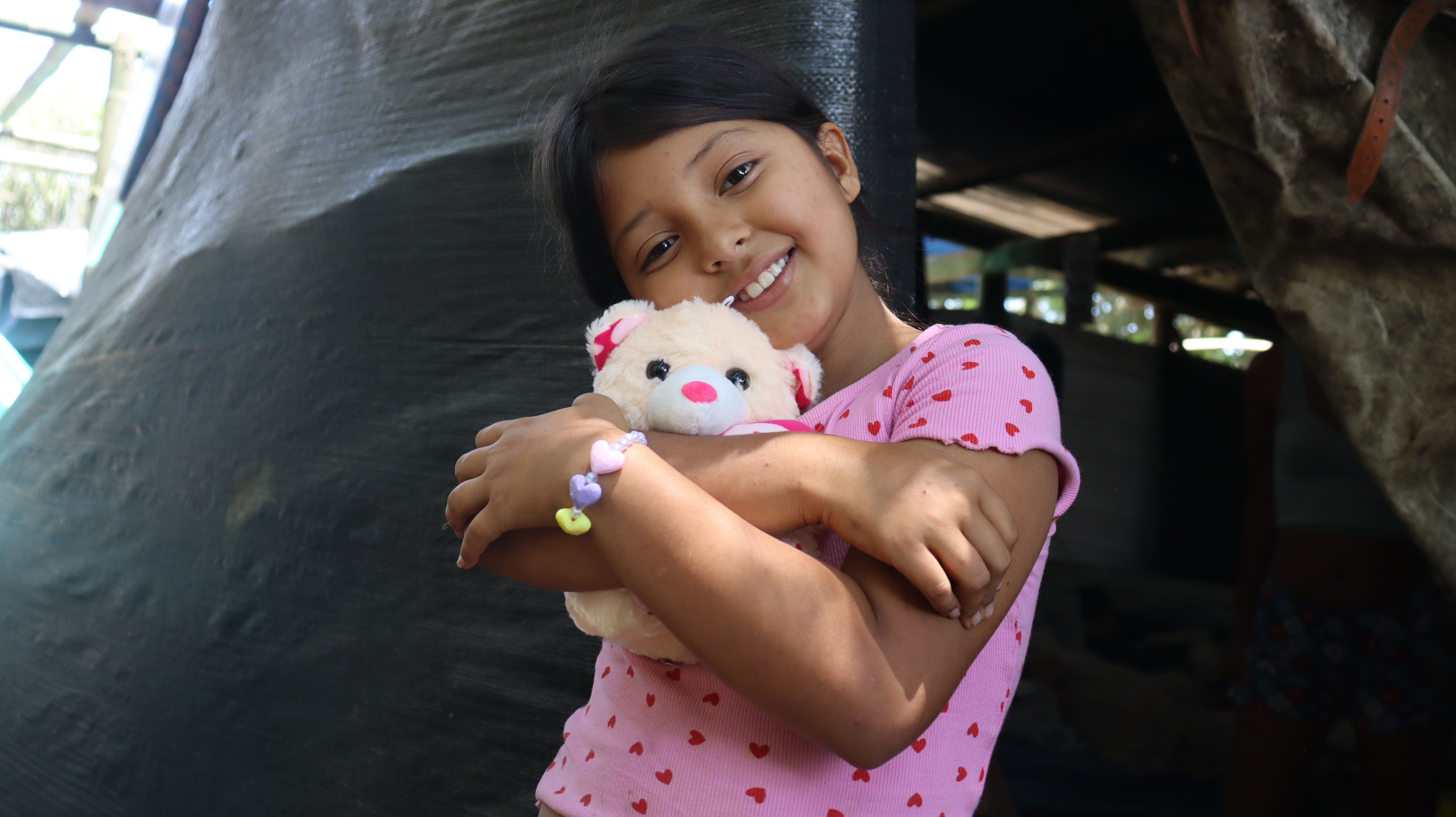
Danna has received some of the assistance that has reached the settlement: toys and stuffed animals that she enjoys playing with and for which she is deeply grateful. They have also inspired her to help others.
When many donations arrive, Danna and her family share some of them with other families.
 In this way, hope continues to multiply.
This is the kind of hope World Vision brought during its visit to the settlement. Hygiene kits were distributed to families, while recreational kits were provided for children.
The visit was brief, but for children like Danna, it was a reminder that they are not alone. Their resilience encourages us to continue offering words of encouragement, moments of care, and assistance that can bring comfort—and inspire children and families to become instruments of hope themselves.
“Everything you are giving us is a great help. I want to tell you thank you very much. When I grow up, I want to help people like you a lot, to give back what you gave me.”
Danna says these words as she looks at the items from the kits spread across her bed, carefully examining each one.
Her joy is clear, but so is something more: the desire to one day give to others what she has received.
“They are never alone. They are with God. God is beside them, behind them, in front of them, everywhere. He will never leave them alone. God is our father. Thank God many people were not seriously injured,” Danna says, sending a message of encouragement to children who may still feel the earth moving, even after the shaking has stopped for everyone else.
Girls like Danna remind us of the goodness that can live in a child’s heart—the strength found in compassion, the comfort of an embrace, and the ability to hold on to hope even in the middle of uncertainty.
Danna has many dreams. She wants to study, help animals, and help people living on the streets so they can have a home and food.
“I know I’m not going to be the richest person in the world, but I know that with my heart I can help people.”
A noble and compassionate heart, full of faith, already carrying hope to those affected by the August 10 earthquake—and to everyone who hears her story and feels the depth of her words:
“Seeing my country like this is so sad. It’s as if someone were throwing rocks at my chest.”
Danna, 9 years old.
Temporary Accommodation: A designated place, such as a shelter, collective center, intended to provide temporary protection to people affected by natural disasters, emergencies, or situations of extreme vulnerability. (National Unit for Disaster Risk Management, 2024)
Informal Human Settlement: Areas occupied or built spontaneously, often without official urban development permits or complete access to basic public services. (Ecología Verde, 2025)